

1. Understand What Dropshipping Is
Dropshipping is a retail fulfillment method where you don’t keep products in stock. Instead, when a customer buys a product, you purchase it from a third-party supplier who ships it directly to the customer.
Pros: Low startup cost, flexible location.
Cons: Lower profit margins, less control over inventory and shipping.
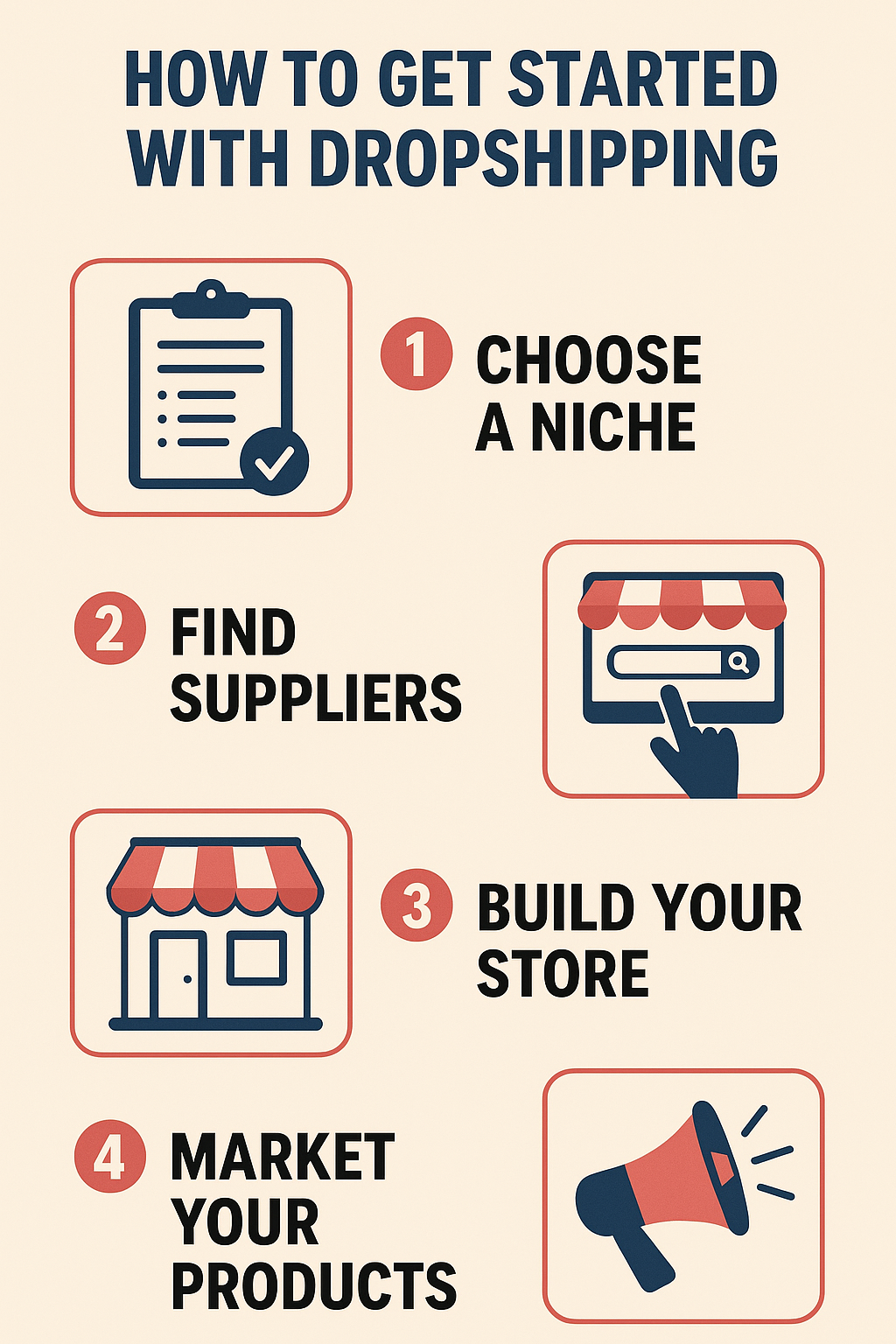
2. Choose a Niche
Your niche determines your target audience. Pick a niche that:
- You’re genuinely interested in.
- Has demand but isn’t overly saturated.
- Allows for a reasonable profit margin.
Critical Tip: Avoid overly generic products like “phone accessories.” Instead, focus on a micro-niche like “eco-friendly wireless chargers.”
3. Research Suppliers
Reliable suppliers are key. Popular platforms include:
- AliExpress
- Oberlo (for Shopify users)
- SaleHoo
Critical Tip: Order samples first to check product quality and shipping times. Poor supplier reliability is the top reason dropshipping businesses fail.
4. Set Up Your Online Store
You can sell via:
- Shopify – easy to use, integrates with suppliers.
- WooCommerce – great for WordPress users.
- Etsy/Amazon – useful for certain niches.
Critical Tip: Your store must have a professional design, clear product descriptions, and trust signals like reviews and return policies.
5. Market Your Products
Without marketing, no one will buy your products. Strategies include:
- Social Media Ads (Facebook, Instagram, TikTok)
- SEO (optimize your store for search engines)
- Influencer Marketing (collaborate with micro-influencers)
Critical Tip: Test multiple channels and analyze ROI. Don’t blindly spend on ads without tracking conversions.
6. Manage Orders and Customer Service
Even though you don’t handle shipping, customer service is your responsibility.
- Respond promptly to inquiries.
- Handle returns smoothly.
- Keep customers informed about shipping updates.
Critical Tip: Excellent customer service can differentiate you from competitors, even if your product is similar.
7. Monitor, Optimize, and Scale
- Track metrics like conversion rate, average order value, and customer acquisition cost.
- Remove low-performing products.
- Test upsells, cross-sells, and advertising strategies.
Critical Tip: Scaling too fast without understanding cash flow and supplier reliability can collapse your business.
Critical Takeaways
- Dropshipping is not a “get rich quick” scheme. It requires strategy, patience, and constant optimization.
- Success depends more on marketing and customer experience than the product itself.
- Small mistakes, like unreliable suppliers or poor marketing, can be fatal.